05 · Design Thinking · Term 2
DeskPal
a way to wait
A desktop companion for remote IT support on campus
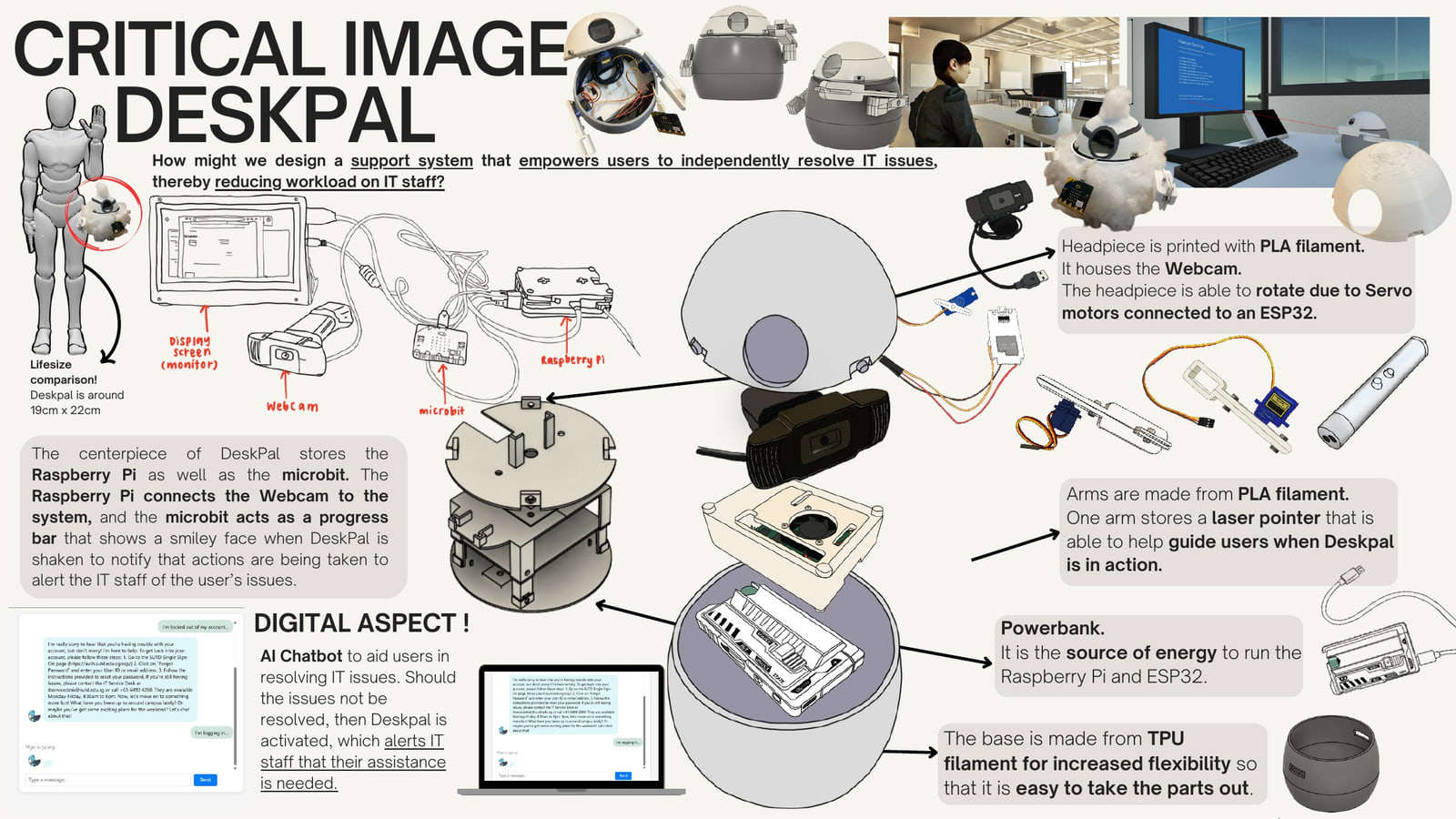
A 19 by 22 cm desk companion pairing an AI chatbot with a remote webcam and laser pointer so IT staff can diagnose campus problems without travelling.
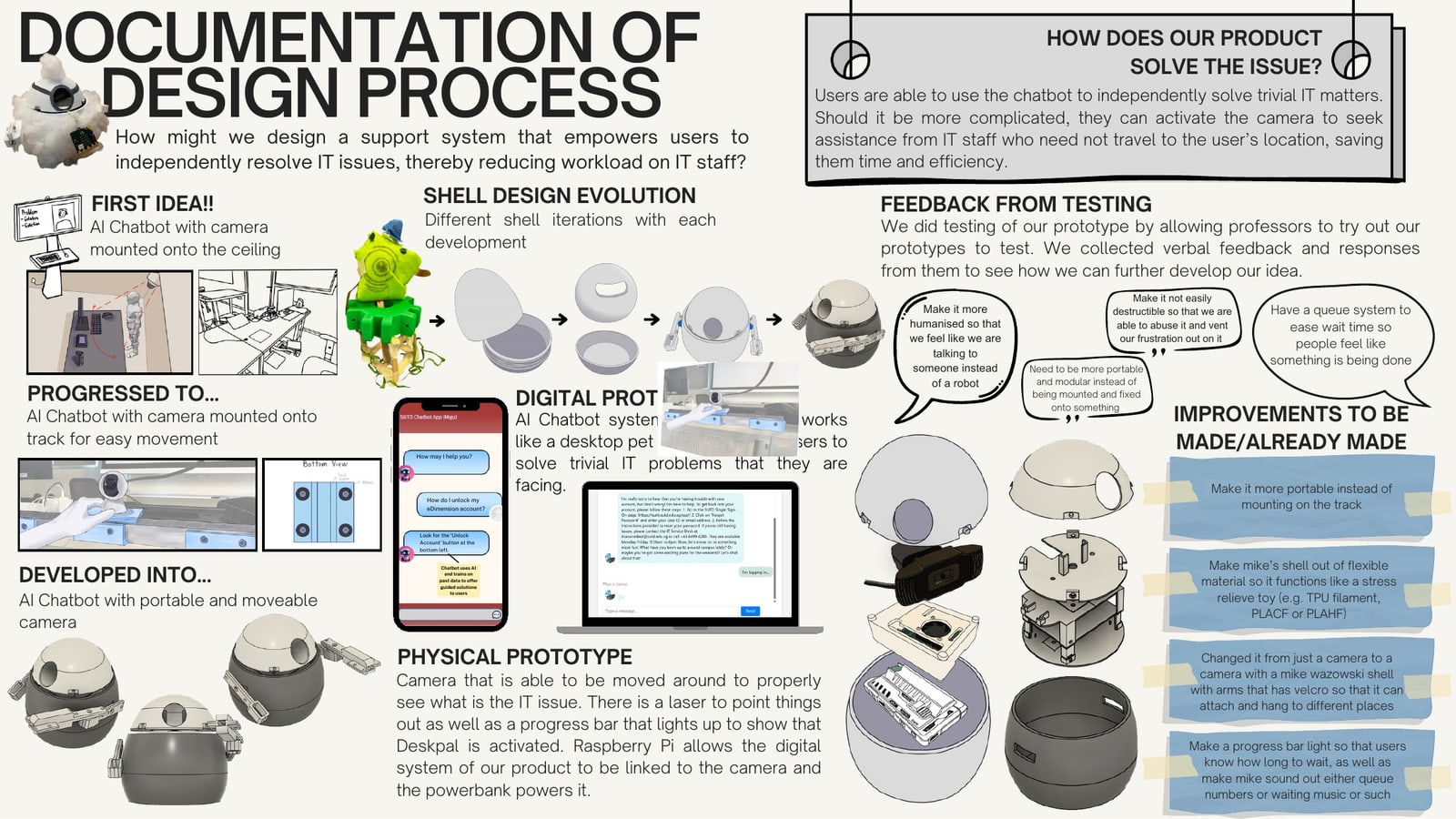
The brief was framed by the team as a single question: how might a support system help users resolve IT issues on their own, and so reduce the workload on IT staff? The site work behind it mapped points of frustration across the school's teaching spaces — lecture theatres, classrooms and staff desks — and settled on the gap between a trivial fault and the walk an IT officer has to make to fix it. Early proposals moved from a chatbot with a camera fixed to the ceiling, to a camera running on a ceiling track, and finally to a portable unit that could be carried to the problem instead of the problem being carried to it.
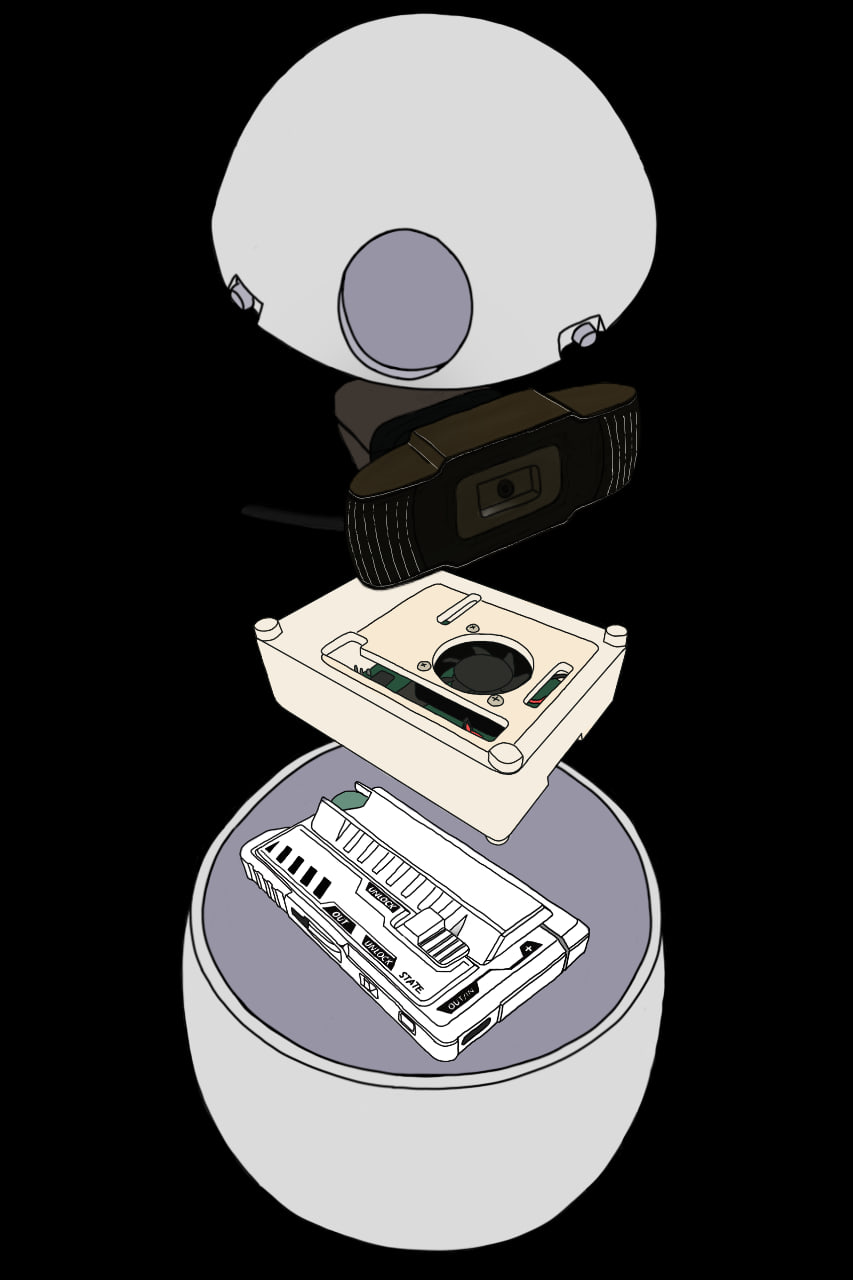
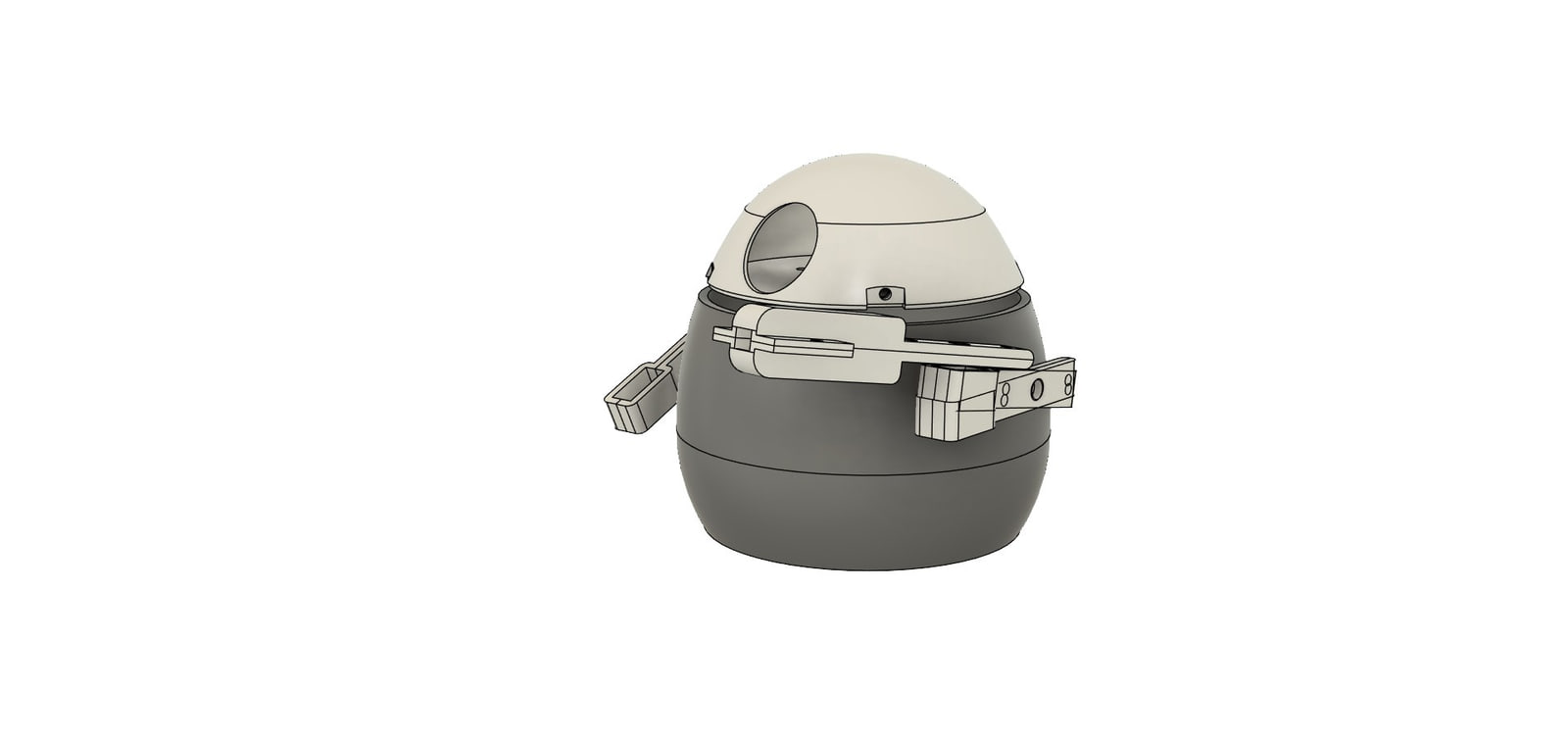
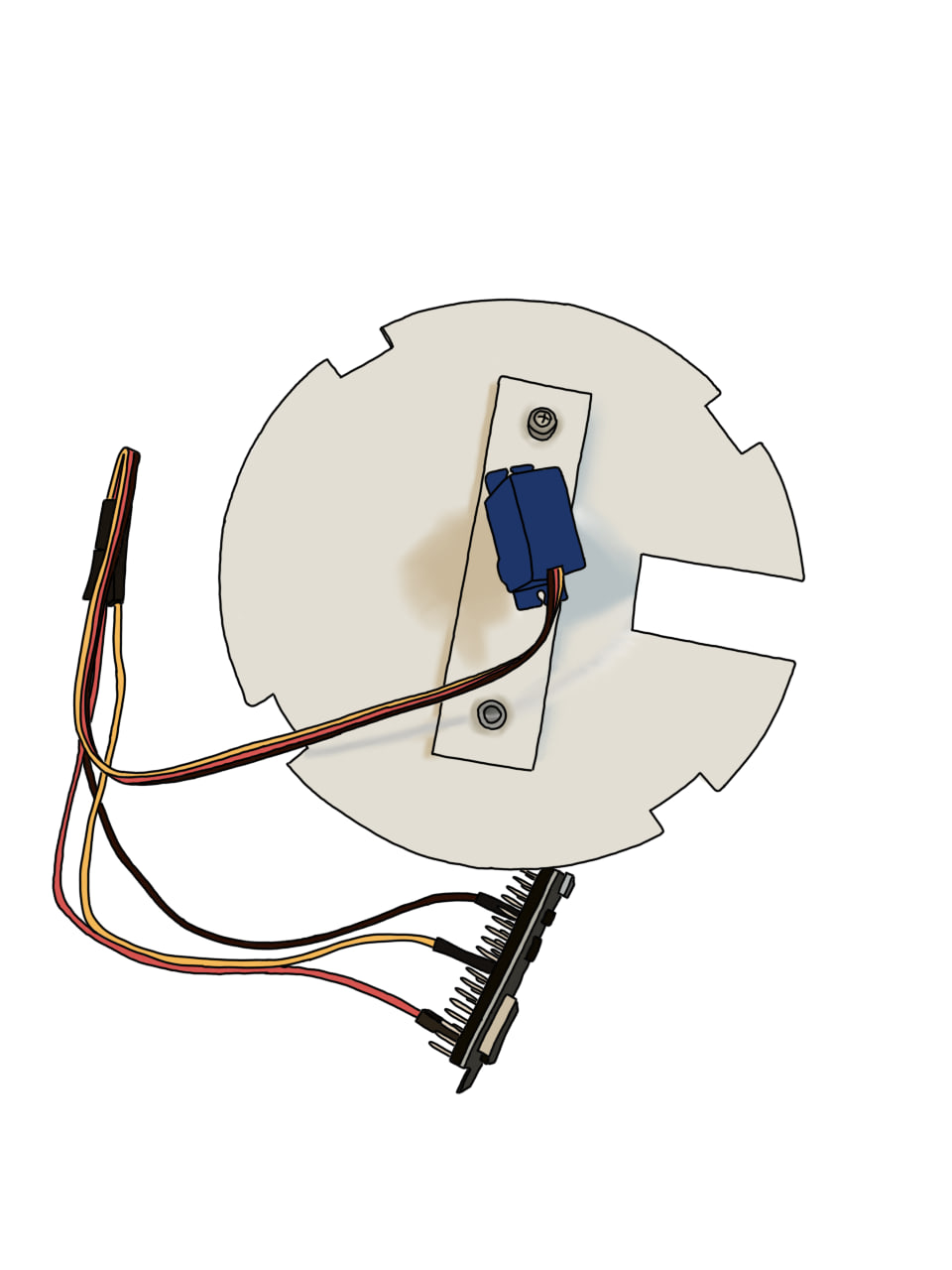
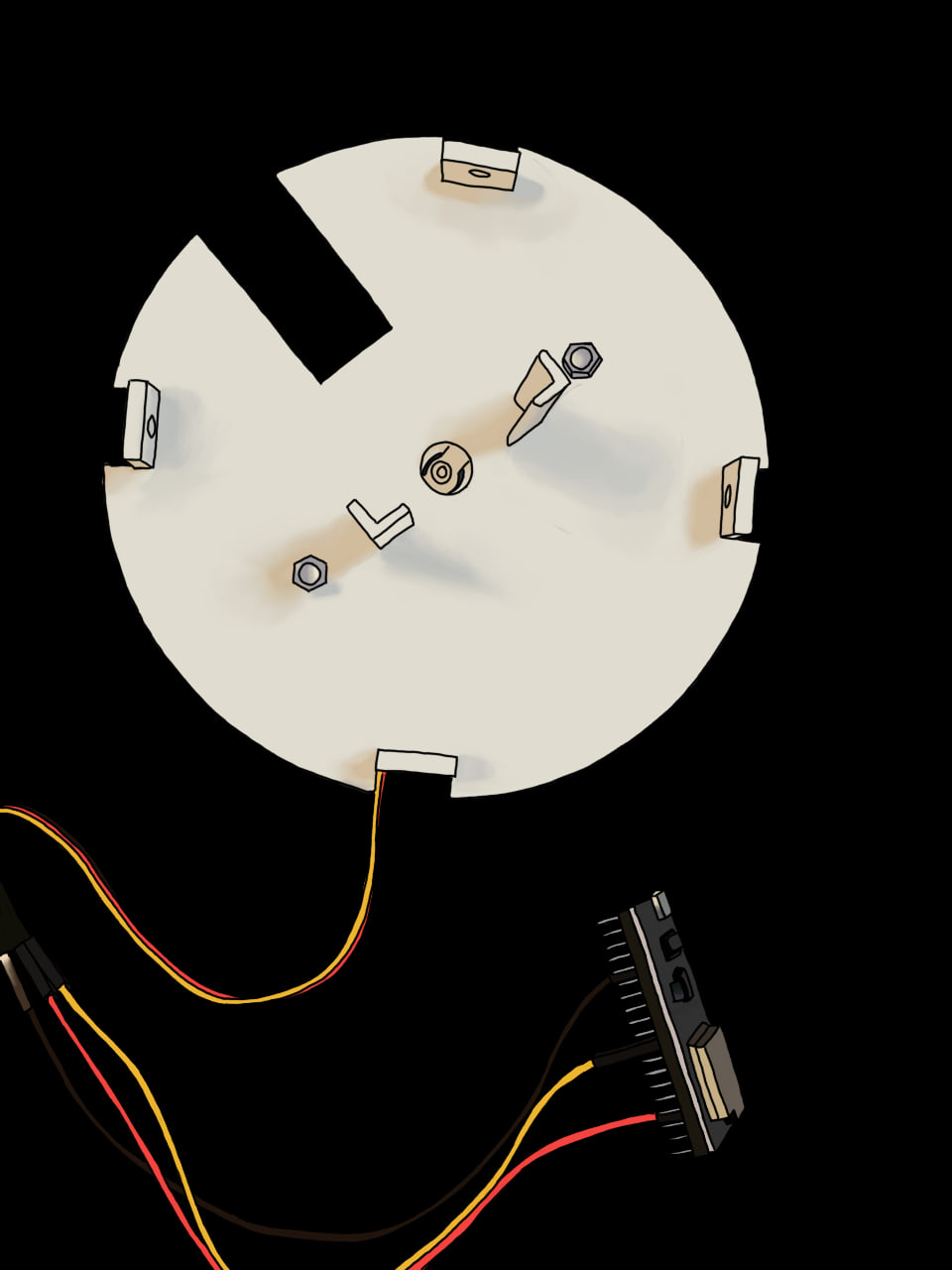
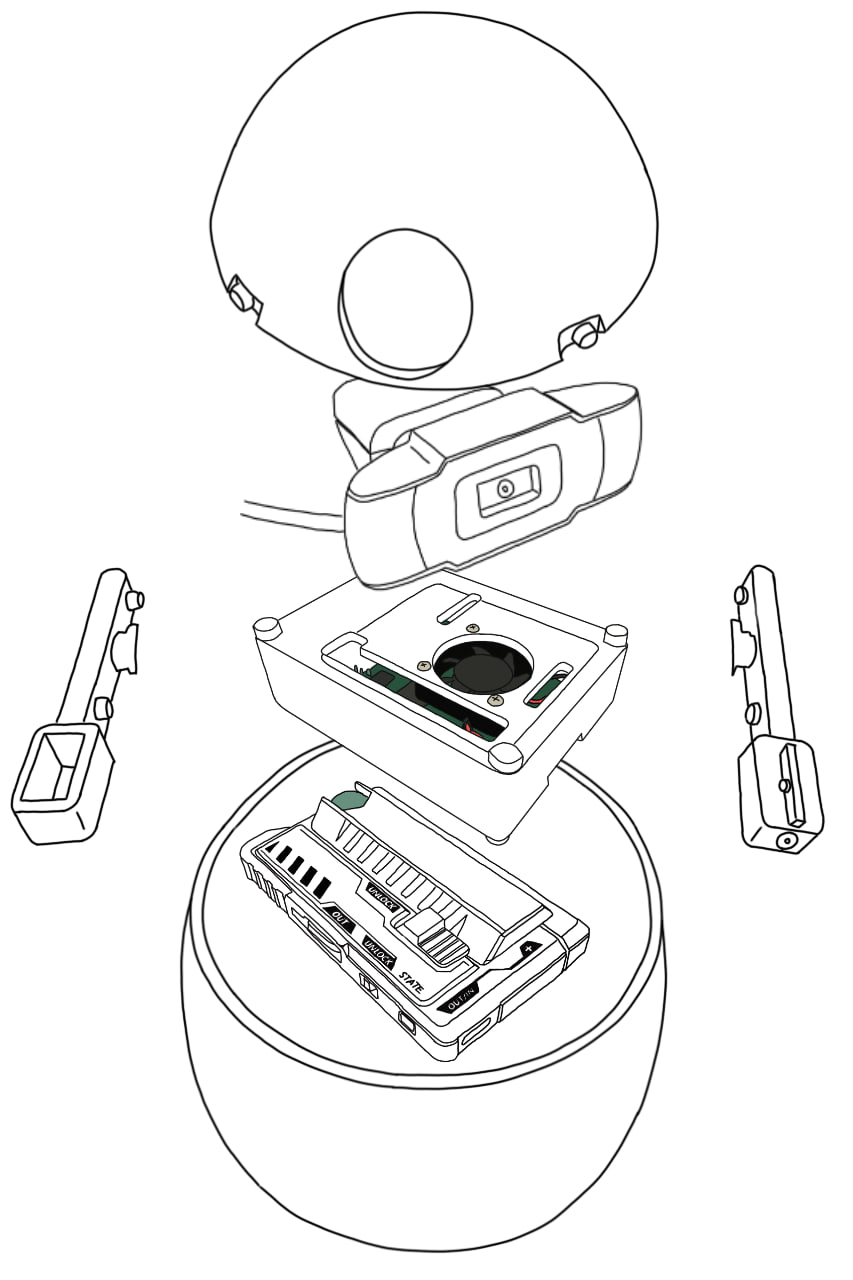
DeskPal is the result: a two-part system, half software and half object. An AI chatbot, trained on past support data, walks a user through routine matters such as unlocking an eDimension account. When the chatbot cannot resolve the issue, the physical unit is activated and alerts IT staff, who can then see the fault through the device rather than attend in person. The body is about 19 by 22 cm and reads as a desk pet: a rotating PLA headpiece housing a webcam, driven by servo motors on an ESP32; a centrepiece carrying a Raspberry Pi and a micro:bit whose LED matrix doubles as a progress bar and returns a smiley face when the unit is shaken to signal that a request has been logged; two PLA arms, one holding a laser pointer used to indicate the object under discussion; a powerbank; and a TPU base chosen for flex, so parts pull out easily and the shell tolerates handling.
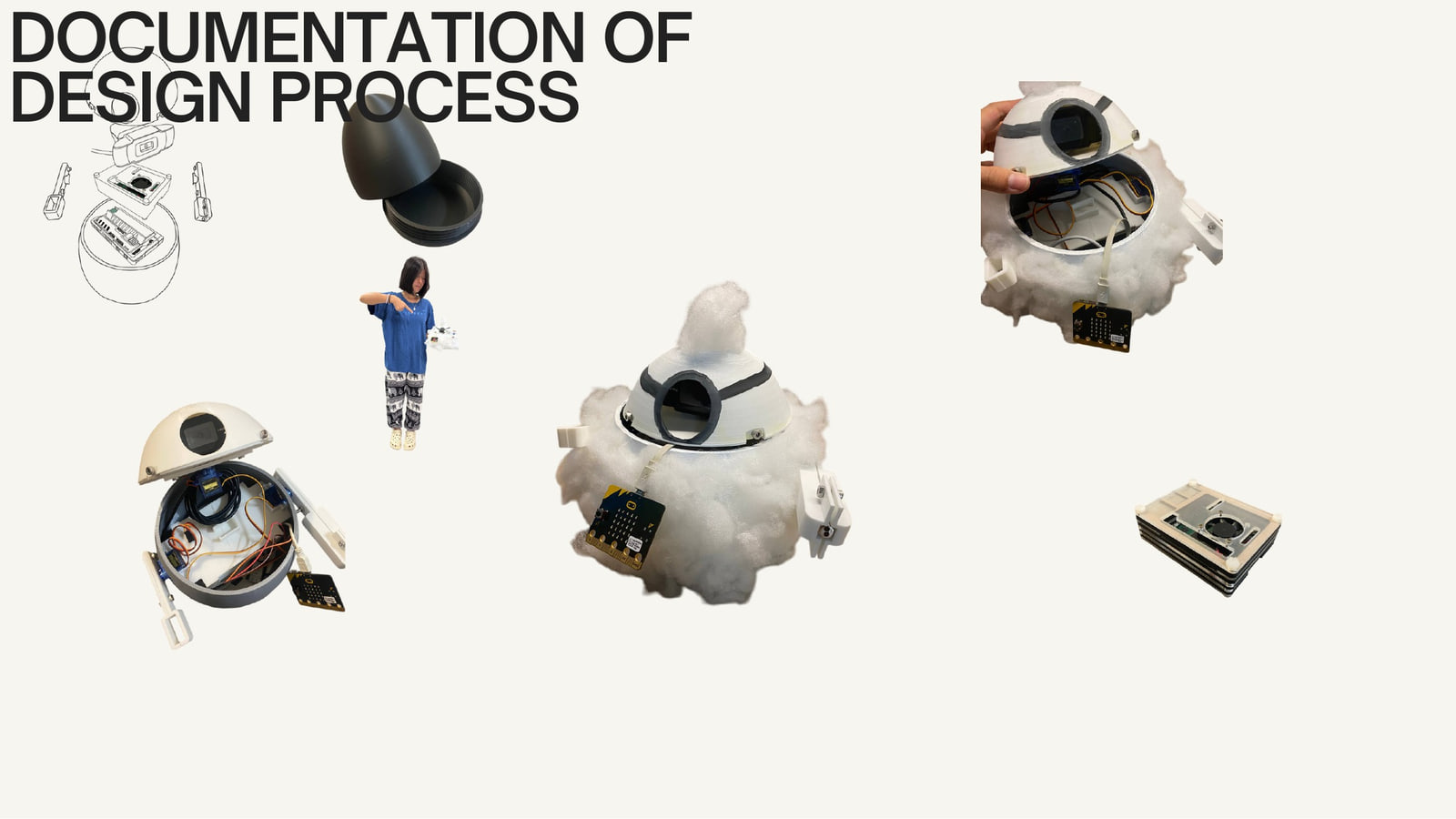
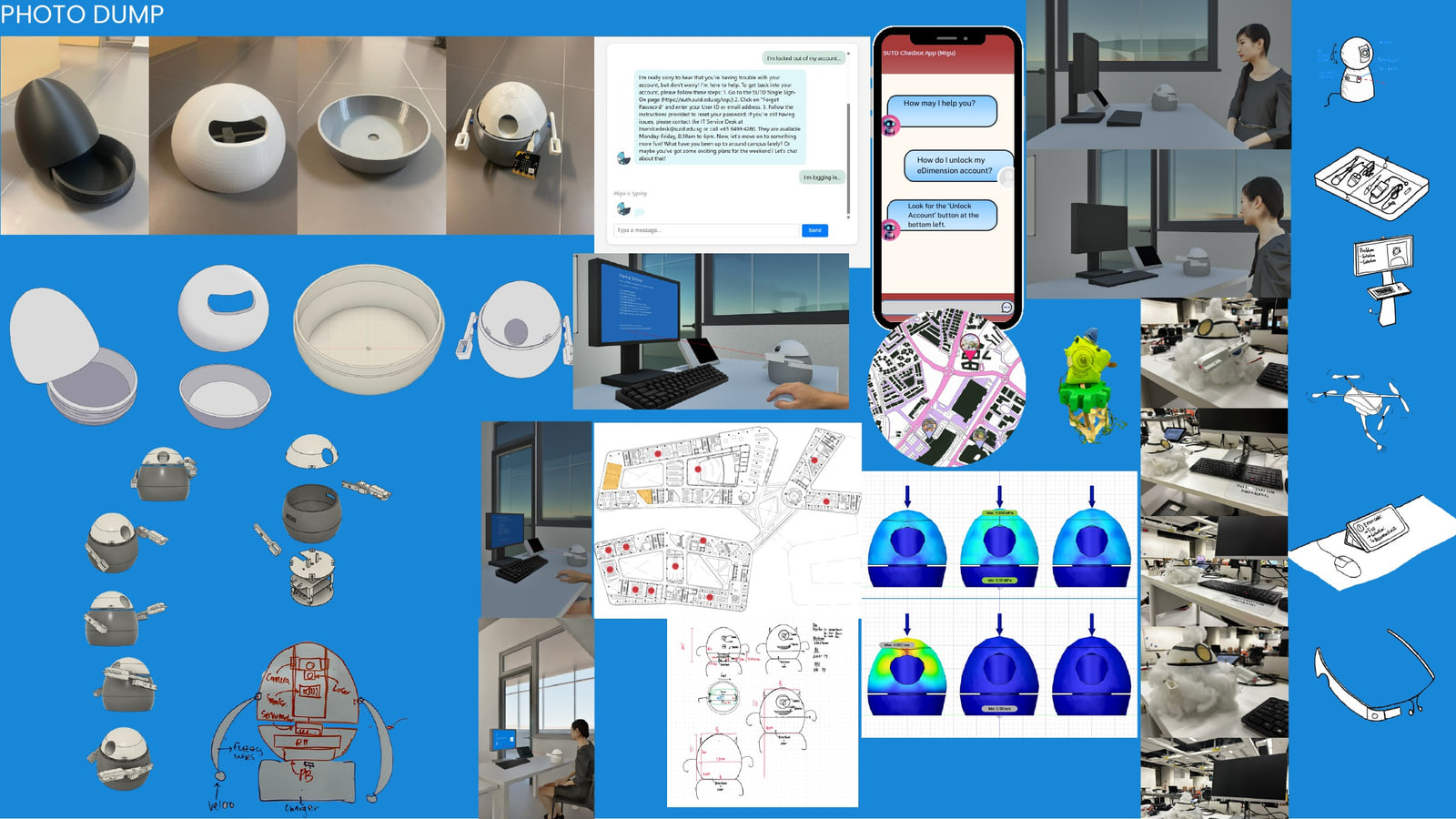
The design process is documented as a run of shell iterations — hard clamshells, a hinged dome, then the squat two-piece body with velcro arms — tested in finite element analysis for stress and displacement under load before printing. Professors were invited to handle the prototypes and gave verbal feedback, which pushed the work in specific directions: make it more humanised so users feel they are talking to someone rather than a robot; make it harder to destroy so frustration can be taken out on it; make it portable and modular rather than mounted; add a queue system so waiting feels accounted for. The response was a soft, tactile shell prototyped in cotton wadding over the printed core, and a progress indicator that gives the wait a visible duration.
Two supporting analyses were carried out on the same object for other subjects. A modelling study built a linear regression for perceived resolution time against issue complexity, user frustration and the binary presence of the chatbot and the desk pet, comparing three scenarios and showing waiting time falling from sixty to thirty per cent of the total. A life cycle assessment compared the choices the build actually made — PLA against TPU, a DIY webcam rig against a sealed store-bought camera, a removable battery against an integrated powerbank — and argued for the modular, repairable route on repairability and second-hand value rather than on headline emissions alone.